
Overview
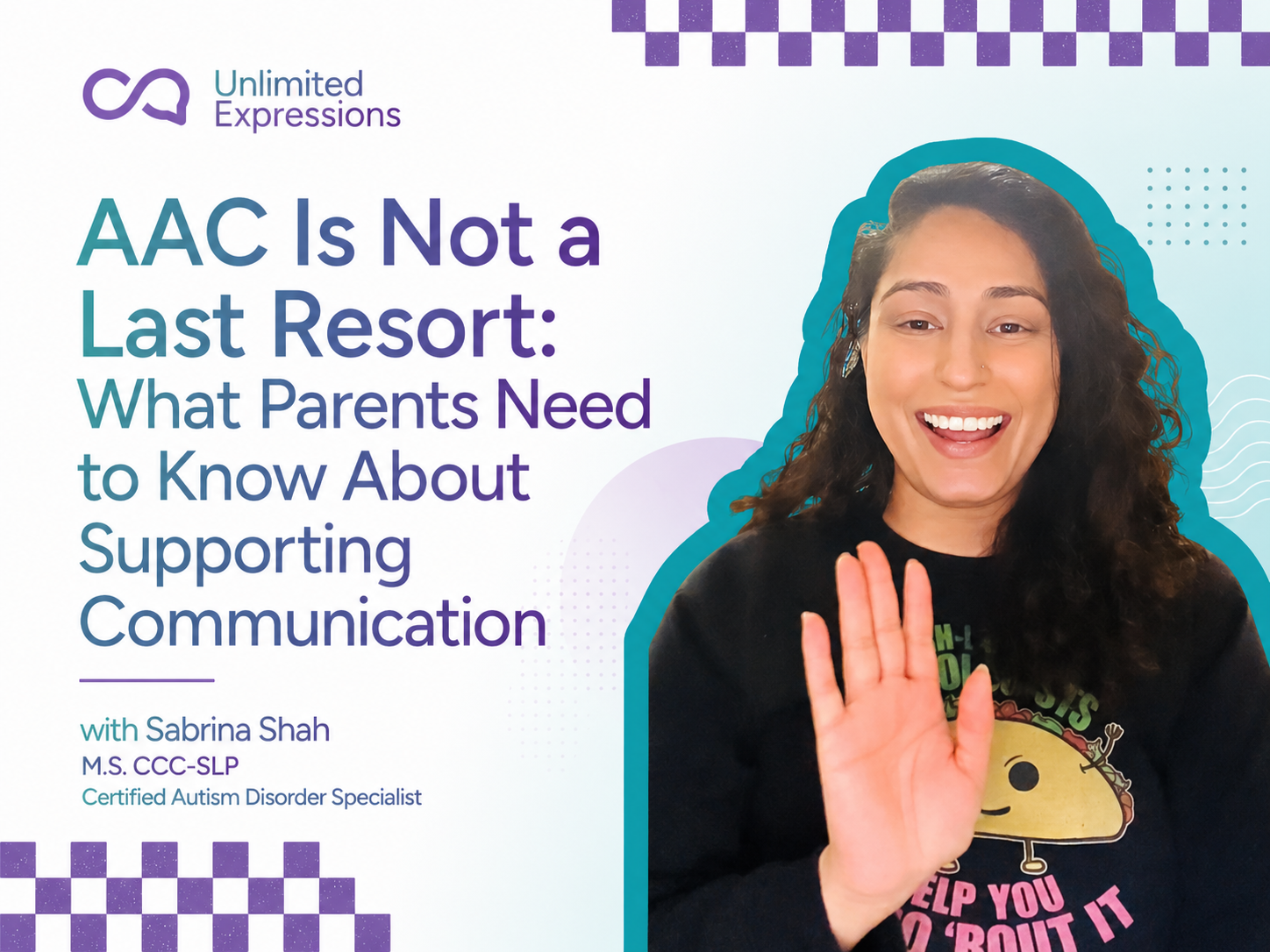
When parents first hear the term AAC, it can bring up a lot of questions. Some families feel unsure. Some feel overwhelmed. Some have already been trying to figure things out on their own for a long time. That is exactly why conversations like this matter. In Unlimited Expressions’ recent Parent Collective expert session, Sabrina Shah helped break AAC down in a way that felt practical, clear, and encouraging. At the heart of her message was a simple truth: communication is one of our most basic human needs, and AAC is one of the many ways that communication can be supported.
When parents first hear the term AAC, it can bring up a lot of questions. Some families feel unsure. Some feel overwhelmed. Some have already been trying to figure things out on their own for a long time. That is exactly why conversations like this matter.
In Unlimited Expressions’ recent Parent Collective expert session, Sabrina Shah helped break AAC down in a way that felt practical, clear, and encouraging. At the heart of her message was a simple truth: communication is one of our most basic human needs, and AAC is one of the many ways that communication can be supported.
AAC stands for augmentative and alternative communication. It includes tools and techniques used to supplement or replace speech for individuals with communication difficulties. That can mean low-tech supports like sign language or picture exchange systems, and it can also mean high-tech options like speech-generating apps and dedicated devices. Sabrina made an important point that helps shift the conversation right away: AAC is not unusual or unnatural. In many ways, we all already use forms of AAC every day through texting, email, and even emojis.
That matters because many parents are introduced to AAC through fear instead of understanding. They may have heard that using a device will stop a child from talking. They may have been told that a child has to start with something basic before “earning” access to a more advanced tool. They may even assume AAC is only for a small group of children with very specific needs. Sabrina challenged those myths directly.
She explained that AAC can benefit individuals with limited speech, unintelligible speech, visual or motor-related challenges, and those whose frustration may show up through behavior when they do not yet have a reliable way to communicate. She also shared that AAC can support increased social interaction, reduce frustration-driven behavioral challenges, and strengthen overall language development. Just as importantly, she noted that research shows AAC can supplement verbal communication rather than take away from it.
That is a message many parents need to hear more often. AAC is not about giving up on speech. It is about opening the door to communication. It is about creating more ways for a child to participate, respond, ask questions, express preferences, and connect with the people around them.
Another powerful takeaway from the session was that AAC is not the sole responsibility of a speech-language pathologist, and it should not only be used during therapy. Sabrina described AAC as an all-hands-on-deck approach. That means support should extend from therapy sessions to classrooms to home life and beyond. Parents, caregivers, teachers, siblings, and peers all play a role in helping a child use communication tools consistently and confidently.
That kind of consistency matters. A child should not only have access to communication when it is convenient for the adults around them. If a device or system supports their voice, then it belongs in the spaces where real life is happening. During meals. During play. In the classroom. In the community. Sabrina’s message was clear: we would never take away someone’s voice, so we should think carefully about how we treat the tools that give a child access to theirs.
She also reminded parents that AAC is not a quick fix. Progress does not come from handing a child a device and hoping it works on its own. It takes modeling, repetition, practice, and daily application. It also takes collaboration. Sabrina emphasized the importance of involving the full team around the child, including speech-language pathologists, pediatricians or primary care providers, and in some cases occupational therapists, physical therapists, vision specialists, developmental pediatricians, and others who can help ensure the support matches the child’s sensory, physical, and communication needs.
For families wondering how to get started, that collaborative approach is often the first step. Sabrina explained that parents do not have to figure it out by themselves. An AAC evaluation can help identify the communication tools and customizations that best fit the individual.
AAC should not be seen as a last resort. It should be viewed as an early, meaningful tool that helps children communicate more fully and more confidently. For parents, that shift can change everything. It can move the conversation from fear to possibility, from confusion to support, and from isolation to community.
That is what makes sessions like this so valuable. They do more than share information. They help families feel less alone. They replace myths with understanding. They offer practical next steps. And they remind parents that communication support should not be delayed simply because a child’s needs do not fit someone else’s expectations.
Through the Parent Collective, Unlimited Expressions is continuing to create space for those kinds of conversations — the ones that equip parents with tools, truth, and trusted guidance. That work is deeply aligned with the brand’s commitment to culturally affirming care, parent empowerment, and building a stronger community around children with diverse needs.
Join the Parent Collective for more expert-led conversations, practical resources, and support designed to help you advocate for your child with greater clarity and confidence.